
India's GDP surged to 7.8% and growth forecasts are climbing: Why the Reserve Bank of India now faces 75bp of hikes
India’s macroeconomic outlook has strengthened following a sharp Q1-FY27 Gross Domestic Product (GDP) print of 7.8%, prompting financial institutions to upgrade both medium-term growth projections and interest rate expectations. Strong high-frequency indicators and upcoming festival season demand continue to underpin broad-based economic momentum. However, diminishing economic slack and persistent cost pressures are shifting central bank expectations, with analysts warning that the Reserve Bank of India (RBI) may need to execute a cumulative 75 basis point tightening cycle to maintain real policy buffers.
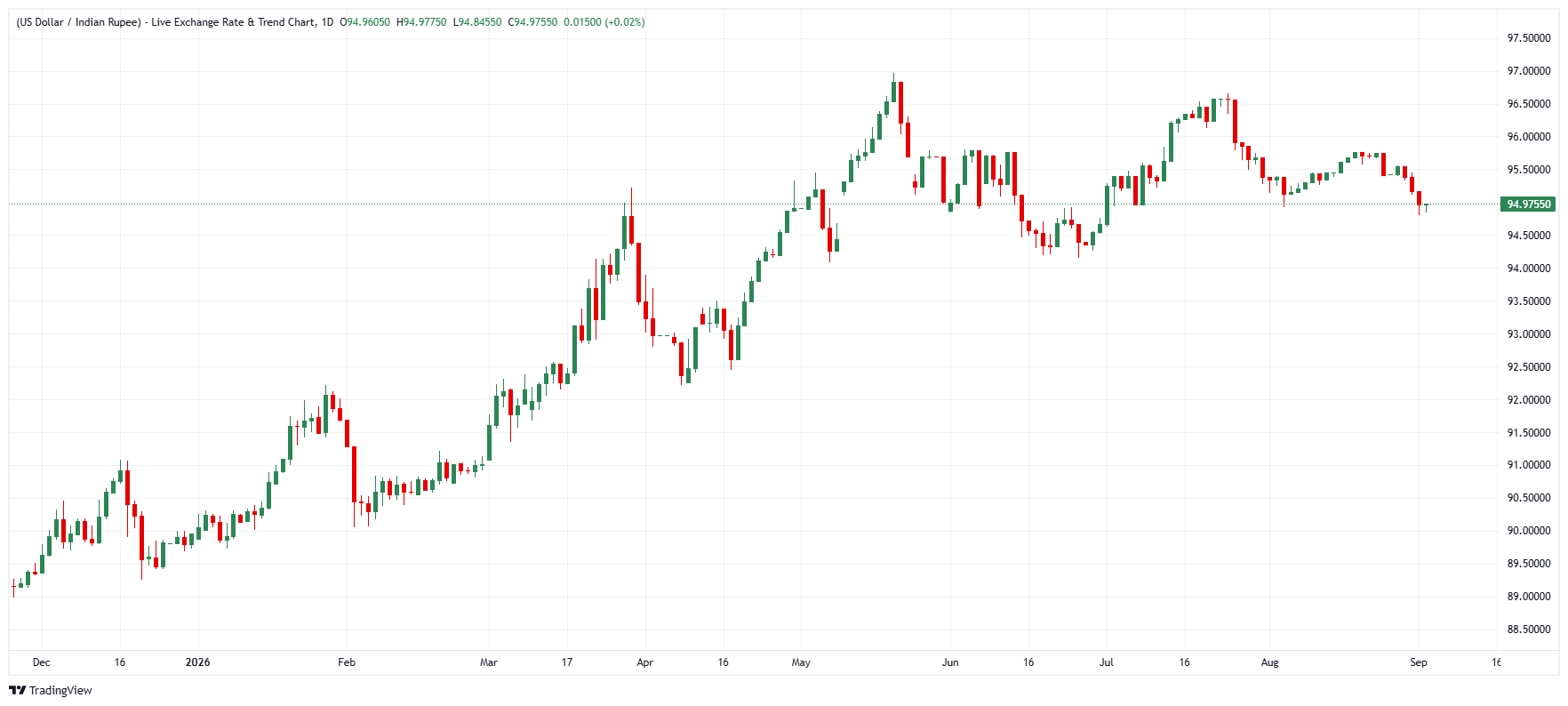
Institutional Analysis: Societe Generale vs. Standard Chartered
To compare how leading institutions view India’s growth and policy trajectory, we highlight the core comparisons between Societe Generale and Standard Chartered:
- FY27 GDP Growth Trajectory: Standard Chartered revised its full-year FY27 GDP forecast upward to 7.2% (from 6.6%), driven by a 7.8% Q1 expansion and projected 7.4% Q2 growth. Societe Generale notes economic activity is outperforming the RBI's baseline 6.7% projection, indicating faster absorption of spare capacity.
- RBI Policy Rate Forecast: Societe Generale now projects three consecutive 25bp rate hikes — in October, December, and February — lifting the repo rate from 5.25% to 6.00% by early 2027. Standard Chartered focuses on growth acceleration while acknowledging H2 downside risks.
- Inflation & Cost Spillover Risks: Societe Generale cautions that food, fuel, and input-cost pressures are increasingly likely to spill over into core inflation as capacity tightens. Standard Chartered notes El Niño risks and higher inflation could slow H2 growth to 6.7%, though underlying momentum remains strong.
Strong activity profile drives Societe Generale’s 75bps RBI hike forecast
According to Kunal Kundu at Societe Generale, India's economic outperformance signals that spare capacity is eroding faster than previously assumed. Combined with a hawkish global policy backdrop and potential core inflation spillovers, a 50 basis point rate increase is no longer considered adequate to manage price risks and maintain an effective real rate buffer.
"We revise our RBI policy-rate forecast to three 25bp hikes, from two previously, taking the repo rate from 5.25% to 6.00% by early 2027... With growth materially outperforming, inflation risks tilted upwards and global monetary conditions turning less supportive, a 50bp tightening cycle would be insufficient to restore an appropriate real policy-rate buffer."
Robust Q1 expansion leads Standard Chartered to upgrade FY27 GDP to 7.2%
Taking a comprehensive view of activity metrics, Anubhuti Sahay and Saurav Anand at Standard Chartered emphasize that India's domestic momentum is comfortably absorbing global energy and supply chain headwinds. Continued strength across composite indicators and seasonal consumer demand suggests that near-term output will remain significantly above consensus expectations.
"We revise our FY27 (year ending March 2027) GDP growth forecast to 7.2% from 6.6%... The revision reflects stronger-than-expected Q1-FY27 (quarter ended June 2026) GDP growth of 7.8%, versus consensus – including us – of 7.3%; continued momentum in July, as indicated by our composite economic indicator; and the likelihood that activity and sentiment remain supportive into the festival season."
Based on the combined perspective of both financial institutions, India’s economic profile exhibits strong fundamental momentum alongside emerging monetary policy shifts. While Standard Chartered highlights how robust Q1 performance and festival demand will push full-year growth to 7.2%, Societe Generale cautions that this rapid expansion limits economic slack, creating a clear rationale for the RBI to lift the repo rate to 6.00% by early 2027.
(This article was created with the help of an Artificial Intelligence tool and reviewed by an editor. Know more.)